01 / EQUIPMENT
Choose for the vessel
Start with the load profile and duty. Review fit, service access, ventilation, exhaust, noise and vibration criteria against the vessel brief.

Generator equipment, installation coordination and onboard integration—brought into one clear conversation for superyacht new-build and refit projects.
When equipment, installation and integration are treated as separate hand-offs, even a well-specified project can become harder to coordinate.
A marine generator has to work within a vessel, a schedule and a wider technical environment. Responsibilities can blur when the equipment supplier, installation team and yard are all working to separate briefs.
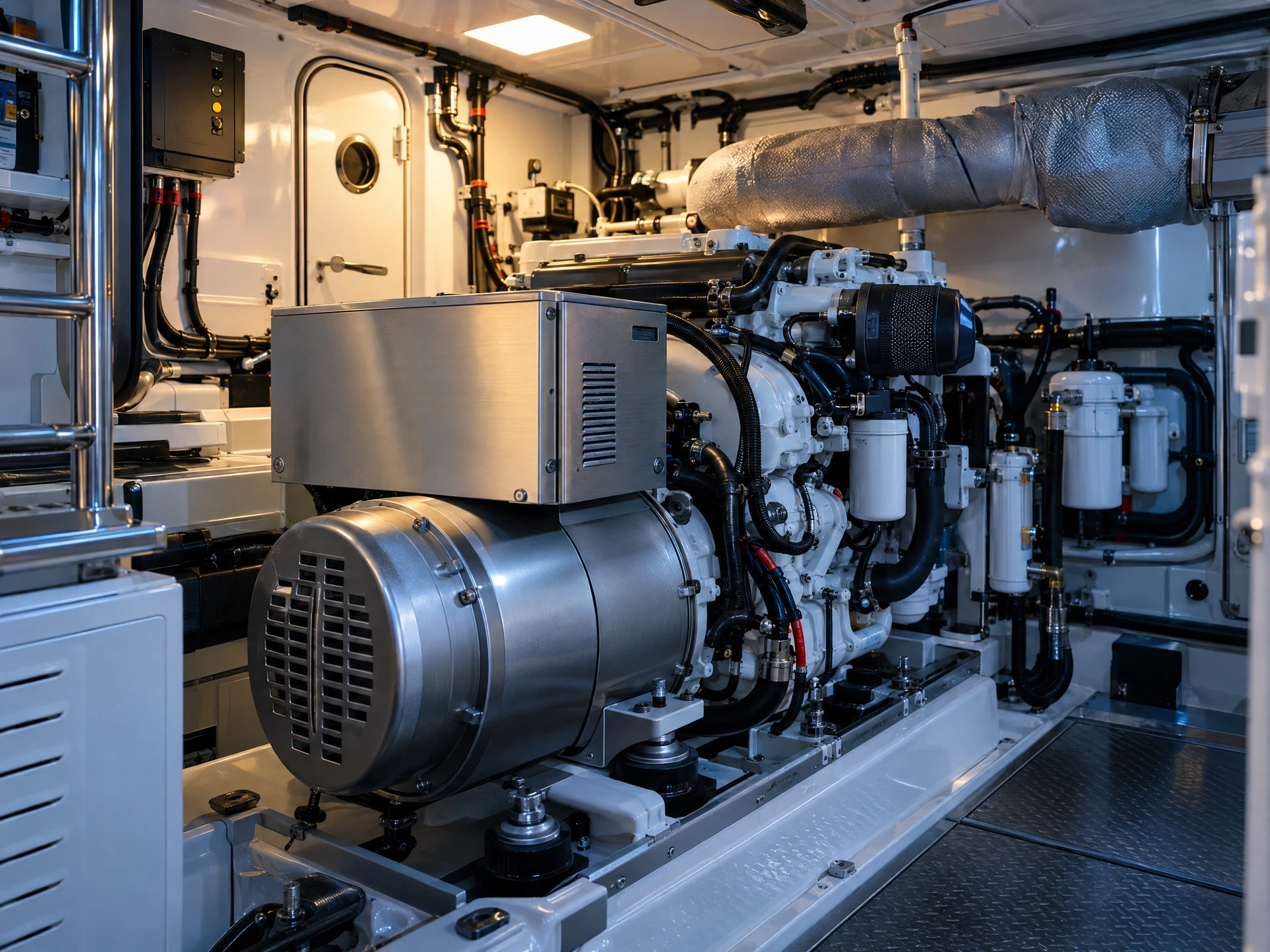
Ukana brings the generator conversation closer to the people, constraints and decisions around the vessel.
Start with the load profile and duty. Review fit, service access, ventilation, exhaust, noise and vibration criteria against the vessel brief.
Review access, cooling, exhaust and electrical/control interfaces with the yard and specialists. Agree who owns installation, testing and commissioning.
Keep the generator conversation with one partner while roles and warranty terms are confirmed against the vessel and agreed project scope.
A practical comparison of how the work is organised—not a claim that one generator is right for every yacht.
Equipment selection, installation scope, warranty terms and final responsibilities are subject to the vessel, project specification and agreed contract.
Whether you are planning for an owner or managing a yard schedule, a useful first step is a technical conversation around the vessel and its constraints.
Discuss onboard power needs, refit priorities and the practical questions behind a generator decision.
Keep equipment, installation planning and project dialogue connected from the technical brief onwards.
A first conversation helps establish whether the project and the scope are a fit.
Ukana’s offer brings marine-generator equipment together with installation planning and onboard integration. The scope is discussed against each vessel and project.
Refit projects are part of the intended conversation. Share the vessel context, timeline and known constraints so the project can be discussed with the right people.
The project model is designed around dialogue with shipyards and refit teams. Specific responsibilities, interfaces and deliverables should be agreed before work begins.
Equipment suitability, installation scope and warranty terms depend on the project specification and agreed contract. They should be confirmed for the individual vessel rather than assumed in advance.
Share the project stage, yacht context and the questions already on the table. We’ll start there.